
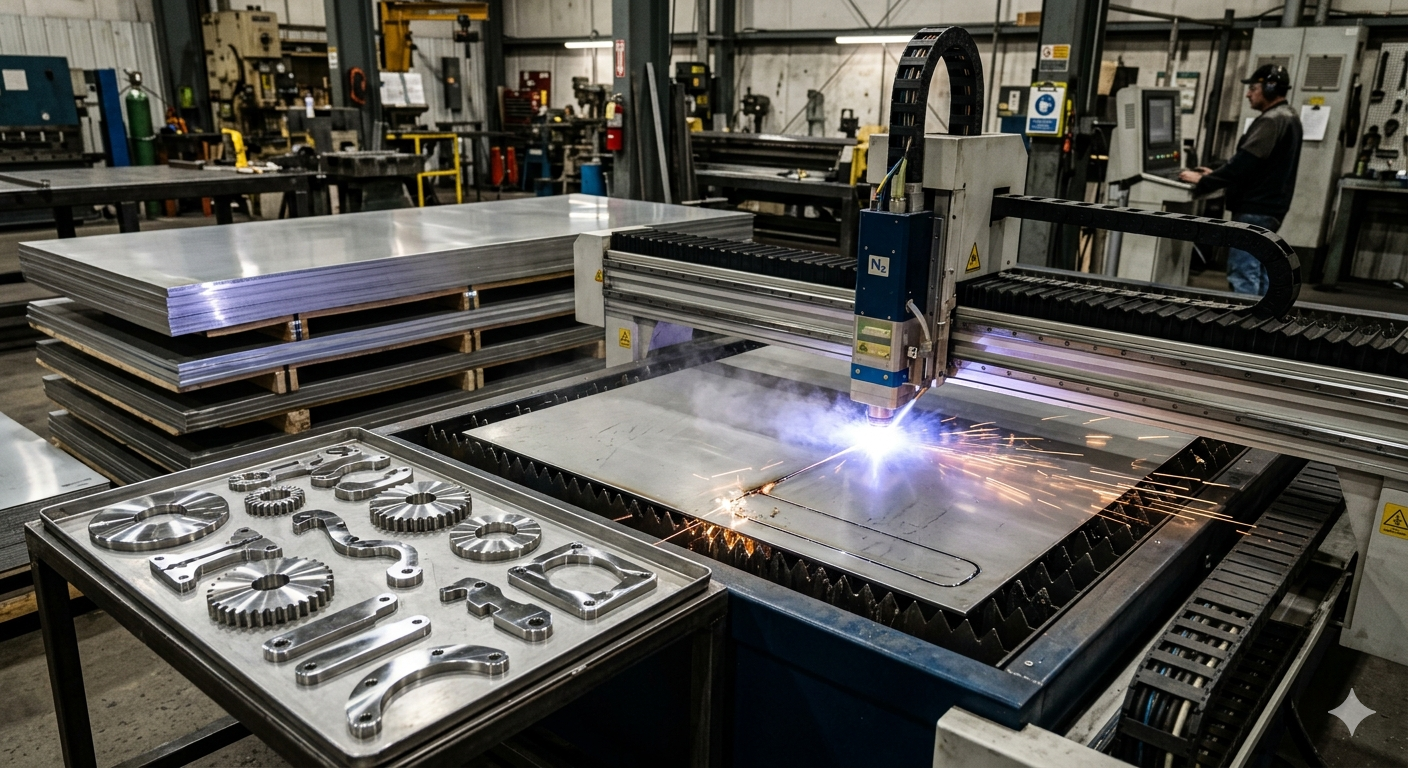
Laser cutting is one of the most important processes in modern metal fabrication because it combines speed, accuracy, and repeatable quality. Yet the laser source alone does not determine performance. The assist gas used in the process has a direct effect on cut quality, production stability, and operating cost. In stainless steel, aluminum, galvanized sheet, and other surface-sensitive applications, nitrogen is often the preferred gas.
This is where PSA nitrogen generators become highly valuable. Instead of depending on cylinders or bulk liquid supply, manufacturers can produce nitrogen on-site and on demand. That means better cost control, more process consistency, and less exposure to supply interruptions.
In laser cutting, the gas does much more than blow molten material away from the kerf. It also protects the cutting zone, supports edge quality, reduces oxidation, and helps maintain a clean finish.
Because nitrogen is an inert gas, it does not react with the material during cutting. That makes it ideal for applications requiring:
Nitrogen is especially important when cutting stainless steel and aluminum, where oxidation or darkened edges are unacceptable. A clean nitrogen-assisted cut can significantly reduce grinding, rework, and post-processing time.
PSA (Pressure Swing Adsorption) technology separates nitrogen from compressed air by using adsorbent material that selectively retains oxygen and certain other components, while nitrogen passes through as the product gas.
The basic process is straightforward:
This allows manufacturers to generate their own nitrogen on-site rather than relying on external deliveries. For laser cutting operations with regular or high nitrogen consumption, this can transform both operating efficiency and cost structure.
Cylinder and liquid nitrogen supply often include hidden costs such as rental, transport, handling, refill logistics, and price volatility. With a PSA system, the main cost drivers are electricity, maintenance, and compressed air, making cost planning far more predictable.
Running out of gas or waiting for deliveries can stop a production line. On-site nitrogen generation reduces this dependency and supports uninterrupted manufacturing.
In laser cutting, it is not enough to simply have nitrogen available. Purity, flow, and pressure stability are critical. A properly designed PSA system helps maintain consistent gas conditions for repeatable cutting results.
By reducing cylinder handling and bulk gas logistics, PSA systems simplify daily operations and improve plant efficiency.
There is no one-size-fits-all solution. The correct system should be selected based on:
Many laser cutting applications require high pressure, which means a complete solution may include not only the PSA generator but also a nitrogen storage tank and a booster system. Compressed air quality is also essential. Poor drying or filtration can reduce system performance and negatively affect adsorbent life.
In laser cutting, quality, speed, and total operating cost are closely connected. The stability and quality of nitrogen directly influence edge condition, scrap rate, rework, and overall productivity.
For this reason, PSA nitrogen generators are not just gas supply equipment. They are a strategic investment that can improve process reliability, standardize product quality, and optimize long-term operating cost. When correctly sized and properly integrated, a PSA nitrogen system delivers both technical and commercial advantages for laser cutting manufacturers.